Best things to do in São Tomé and Principe

Last updated on March 11, 2026

Intro

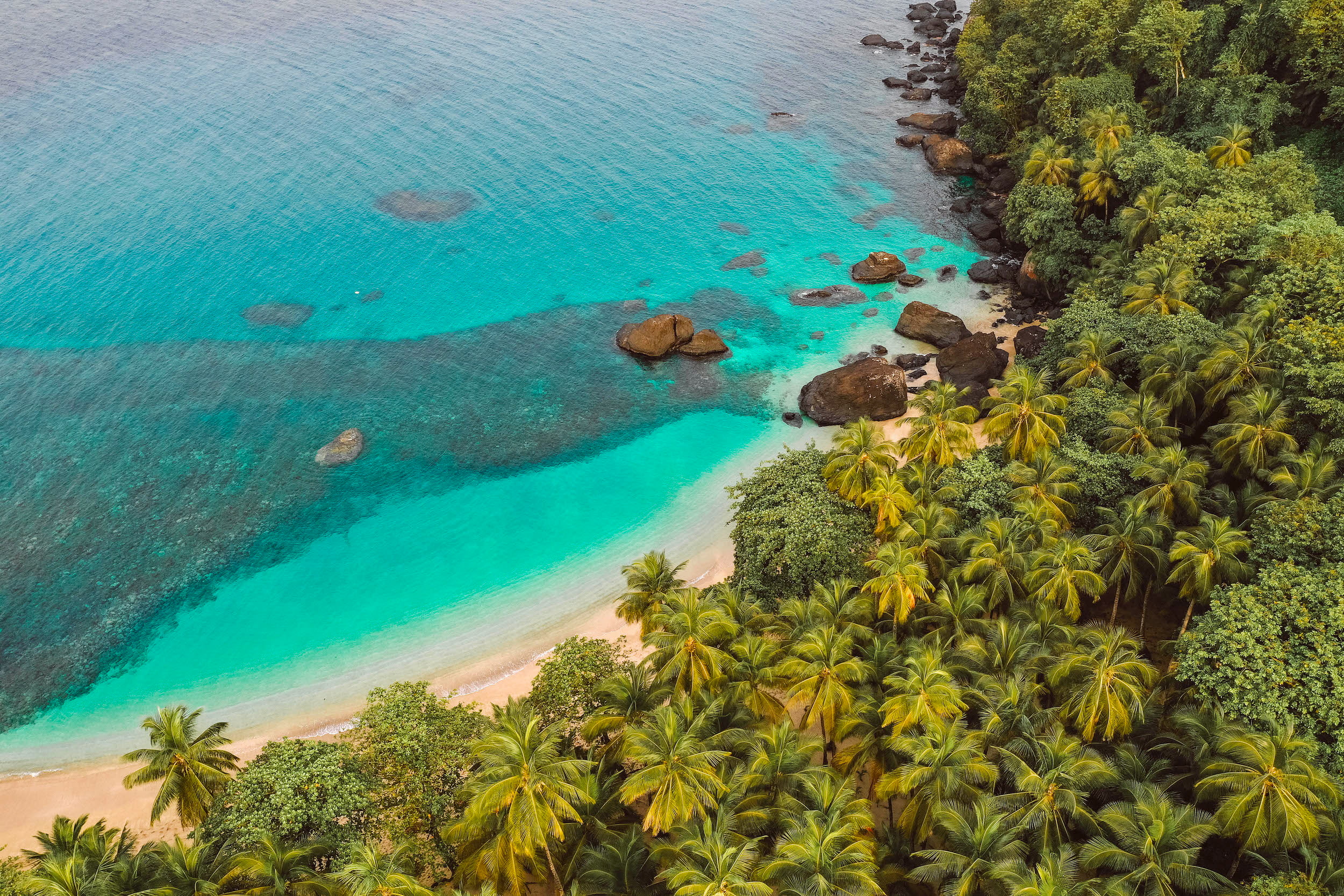
São Tomé & Príncipe feels like a secret you can still step into. One minute you’re driving through dense rainforest, the next you’re staring at a volcanic peak rising out of the jungle, and by the afternoon you’re swimming in warm Atlantic water on a beach that feels completely untouched.


In this guide, we’ve gathered the experiences that make the islands unforgettable – hiking in Ôbo Natural Park, chasing the classic view of Pico Cão Grande, exploring a historic roça, tasting local cocoa and chocolate, and slowing down on beaches like Praia Jalé and Lagoa Azul. You’ll also find a few “on-the-way” stops we love, like the Santa Catarina Tunnel, plus extra ideas if you have more time.


São Tomé is small, but it’s the kind of place where the journey matters: quiet roads, spontaneous viewpoints, villages by the sea, and nature everywhere. Use this list to mix big highlights with simple moments – and you’ll quickly see why people leave already planning a return.

Essential things to do

If it’s your first time in São Tomé and Príncipe, these are the experiences that justify the flight. They combine landscape, history and access to places you cannot easily replicate elsewhere.

Explore Ôbo Natural Park

Often called the “African Galápagos,” São Tomé is a UNESCO Biosphere Reserve and a dream for nature lovers. Nowhere feels wilder than Ôbo Natural Park - the island’s lush rainforest heart. One of the best ways to experience it is by hiking to Lagoa Amélia, a crater lake hidden deep in the jungle. The trail starts near Bom Sucesso and takes around 2–3 hours round trip, depending on your pace and how muddy it is.


Expect dense vegetation, tangled roots and a few slippery sections - this is proper rainforest hiking. The lake can sometimes be partly covered by greenery, but the real highlight is the immersive forest walk itself, surrounded by extraordinary biodiversity. A local guide is highly recommended for safety and to better understand this unique ecosystem.

Chase the ultimate view of Pico Cão Grande

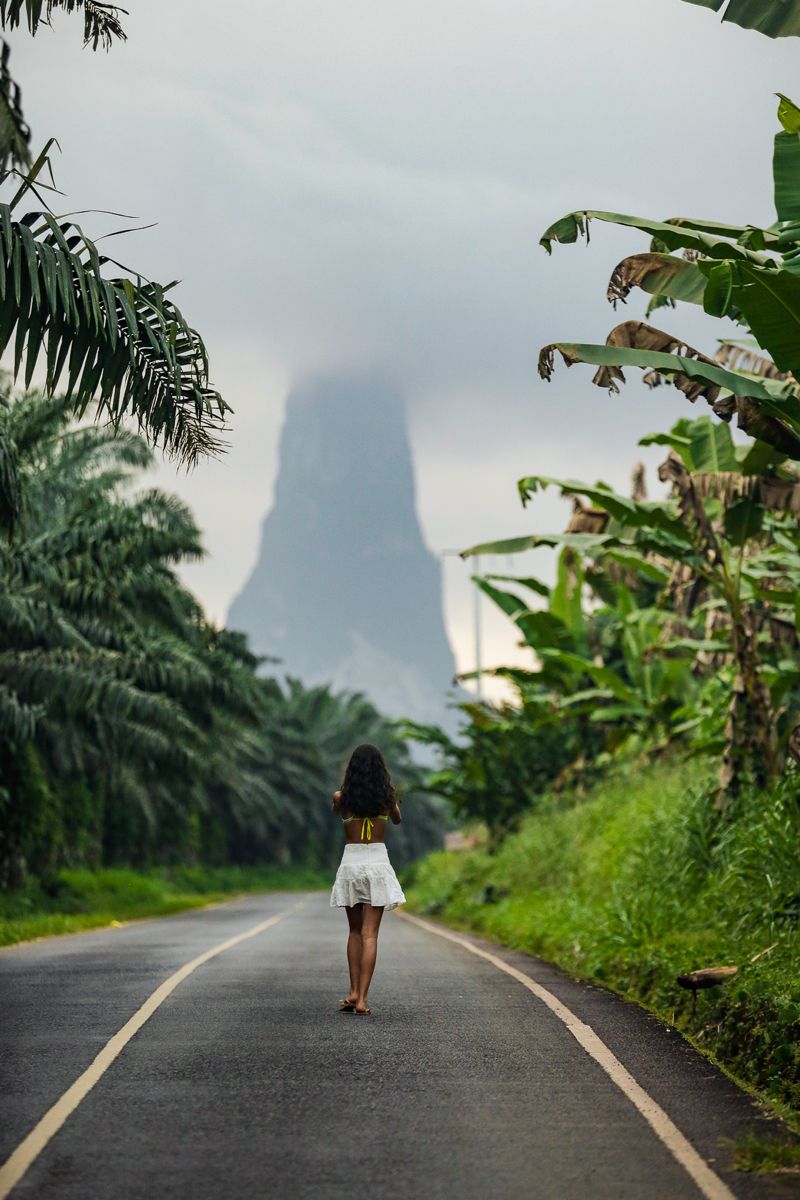
This is the postcard view of São Tomé. Near Porto Alegre, Pico Cão Grande rises dramatically from the rainforest - a striking volcanic needle that suddenly appears on the horizon as you drive south. It’s the island’s most iconic landscape and one you truly can’t miss.


The best way to see it is during a drive from north to south - since there’s only one main road, it’s impossible to miss. There are a few excellent spots where the view opens up, and with so little traffic it’s easy to stop for photos. Visit in the dry season and aim for early morning for the clearest skies, then combine it with nearby beaches and small villages for a perfect southern day.

Explore a historic Roça

One of the most meaningful experiences in São Tomé & Príncipe is visiting a roça - former cocoa and coffee plantations that shaped the islands’ history. Walking through these grand colonial buildings, whether beautifully restored or slowly reclaimed by nature, gives real context to the economy, architecture and social past of the country.


If you’re choosing where to go, start with Roça São João dos Angolares for its excellent restaurant and cultural atmosphere, Roça Monte Café for coffee plantation landscapes and a small museum in the highlands, and Roça Agostinho Neto for its impressive scale and powerful colonial-era architecture. Each offers a different window into São Tomé’s story.

Swim at Praia Jalé

São Tomé & Príncipe is blessed with countless beautiful beaches, but Praia Jalé is one that travelers consistently love. Located in the south, this long, wild stretch of sand is known for its untouched atmosphere, turtle nesting season, and peaceful setting - perfect for long walks with little around but ocean and nature.


Reaching it involves driving through rural areas, sometimes on rough roads, and facilities are limited - part of what keeps it so authentic. It’s best combined with other southern stops, and sea conditions should always be checked before swimming.

Wander through São Tomé city center

São Tomé may be a small capital, but it’s full of character. Walking through the center is the best way to feel the island’s everyday rhythm - colonial façades, lively streets, friendly faces, and the scent of local markets in the air. Stop by the Central Market for fresh produce and a glimpse into daily life, then stroll along the waterfront avenue.


Be sure to visit Fort São Sebastião, the 16th-century fortress built in 1566, which now houses the National Museum. Within just a couple of hours, you can explore the cathedral, the fort, and the historic center - a simple but meaningful way to understand São Tomé beyond its beaches and rainforest.

Taste São Tomé through its cocoa

São Tomé isn’t just beautiful - it’s one of the world’s great cocoa islands. Visiting a local cocoa or chocolate project is a must-do cultural experience: you’ll see how beans are fermented and sun-dried, learn why the island’s chocolate is so prized, and enjoy plenty of tastings along the way.


For a deeper dive, visit Claudio Corallo Chocolate for artisanal production, Diogo Vaz Chocolate for a bean-to-bar plantation setting, or stop at Roça Monte Café to connect cocoa and coffee heritage in the highlands.

Relax at Lagoa Azul

In the north of the island, Lagoa Azul is a true highlight. Known for its striking turquoise waters and volcanic rock formations, this peaceful bay feels like a natural swimming pool when the sea is calm. It’s easy to reach by car and is often combined with a north coast road trip.


Whether you come to swim, snorkel, or simply relax while locals fish nearby, Lagoa Azul has that effortless beauty that makes you want to stay longer.

Drive to Porto Alegre and the Southern Tip

The further south you go, the wilder São Tomé feels. A drive to Porto Alegre takes you through lush rainforest, quiet fishing villages, and some of the island’s most beautiful beaches (Praia Piscina for instance) - all in one scenic stretch. It’s one of the best ways to experience the island’s raw, untouched character.


Road conditions vary and heavy rain can affect access, especially in the wet season, so plan your timing accordingly. The journey itself is part of the experience.

Our take: If it’s your first time, definitely make time for the south – the beaches, the dramatic views, the feeling of being at the edge of the island. That’s where São Tomé feels the most raw and unforgettable. But don’t stop at nature alone. Visit at least one cocoa project and explore a historic roça – it adds depth to your trip and helps you truly understand the island’s culture and history.

Other popular things to do

Once you’ve covered the essentials, there’s still a lot you can realistically fit into your itinerary. These activities add variety and help you understand different sides of São Tomé and Príncipe, from geology to food to daily life.

Visit Cascata São Nicolau
One of the most accessible waterfalls on São Tomé, located along the road between the north and the interior. A short walk leads to the base. It is an easy stop to combine with other northern sights. After heavy rain, water flow is stronger and swimming conditions may change.

Drive Through the Santa Catarina Tunnel
The Túnel de Santa Catarina is a small but striking piece of colonial engineering carved through the rock. Most travelers drive through it, and the sudden darkness makes it a fun, slightly dramatic moment along the coastal road – especially with the surreal ocean views surrounding it.

Pause before or after for photos of the coastline, and bring some cash – local children often sell fresh coconuts nearby, making it a refreshing stop on your journey.

Explore Ilhéu das Rolas (snorkel and equator line)
At the southern edge of São Tomé lies Ilhéu das Rolas, a small tropical islet sitting right on the Equator. A short boat ride from Porto Alegre brings you to one of the country’s most symbolic spots – where you can stand at the Equator Line Monument and quite literally be in both hemispheres at once.

Beyond the landmark, Ilhéu das Rolas offers clear waters ideal for snorkeling when the sea is calm, quiet beaches, and a wonderfully remote atmosphere. Conditions are generally best in the drier months, and the visit pairs perfectly with a southern road trip.
Discover Boca do Inferno & Praia das Sete Ondas
On the island’s northeast coast, Boca do Inferno is a dramatic natural blowhole where waves crash through volcanic rock, sending water high into the air. It’s an easy roadside stop, but the power of the ocean here is impressive – especially when the sea is rough.

Not far from it, Praia das Sete Ondas offers a long, scenic stretch of sand framed by jungle and palm trees. It’s perfect for a walk and for taking in the wild coastal scenery, though currents can be strong, so swimming isn’t always recommended. Together, they make a great addition to a north or northeast coast drive.

Climb Pico do Príncipe
For experienced hikers on Príncipe, this guided trek is demanding and can take 6 to 8 hours round trip. Expect steep sections, dense vegetation and high humidity. Weather can shift quickly. It requires advance coordination and good physical condition.

Take a Boat Trip Along the Coast
Seeing São Tomé from the water is unforgettable. From Santana or on Príncipe, small local boats run along the coast past dramatic volcanic cliffs, hidden beaches, and striking views of Pico Cão Grande rising from the jungle. Some trips include snorkeling stops or routes toward Ilhéu das Rolas near the equator.

Prices usually range between €25–€50 per person for a shared 2–3 hour trip, depending on distance and fuel costs (private boats cost more). Sea conditions matter, so always check the forecast, confirm safety equipment, and agree on duration and price before departure.

Visit Roça Sundy (Príncipe)
Known for its historical link to the 1919 eclipse experiment that confirmed Einstein’s theory, Roça Sundy is partially restored. Even if you are not staying there, you can visit the grounds and understand its scientific and colonial significance.

Hike in Ôbo Natural Park (southern trails)
Beyond Lagoa Amélia, there are deeper trails inside Ôbo. These usually require a guide and more time. Expect river crossings and muddy terrain in rainy months. They offer stronger immersion in primary forest ecosystems.

Visit local markets
Markets in São Tomé city and smaller towns show daily trade in fish, breadfruit, bananas and spices. They are not designed for tourism (which is probably what makes it more charming!) but are open and accessible. Morning visits give the most activity.

Relax at Praia Inhame
In the south of São Tomé, this beach area has basic lodging and access to boat transfers toward Ilhéu das Rolas. It works well as a base for exploring the southern coastline over 1 to 2 days.

Take a guided birdwatching walk
The islands host several endemic bird species. Guided walks increase your chances of spotting them, especially in forest areas. Early morning departures are common and weather dependent.

Drive the north coast road
A self drive along the north coast allows stops at fishing villages, viewpoints and small beaches. Road conditions are generally better than in the far south, making it a manageable half day plan.

Map and orientation

São Tomé and Príncipe is made of two main islands: São Tomé, larger and more populated, and Príncipe, smaller and more remote. Most international flights land on São Tomé island, where the capital, São Tomé city, sits on the northeast coast. From here, roads extend north, south and inland toward the mountains.

On São Tomé island, many key stops are spread along a north south axis. The north coast includes Lagoa Azul and easier coastal drives. The interior holds Bom Sucesso and access to Ôbo Natural Park, including Lagoa Amélia. The south, reached by a single main road, concentrates Praia Jalé, Porto Alegre and viewpoints of Pico Cão Grande. Distances are not long, but road quality and rain affect timing.

Príncipe is smaller and easier to conceptualize geographically. The main settlement is Santo António in the north. From there, rougher roads lead toward beaches such as Praia Piscina and plantation sites like Roça Sundy. Hiking routes, including Pico do Príncipe, start from forested interiors and require guides.

In practice, you move linearly. On São Tomé, days are often structured as north coast, interior hike, or full south exploration. On Príncipe, you usually base yourself in one area and explore outward.

If you want help combining these areas into realistic daily plans, including driving times and overnight suggestions, read our dedicated itinerary guide.

Our take: Base yourself strategically, minimize backtracking and group activities by region rather than trying to cross the island daily.

Free Google MyMaps

To make planning easier, we’ve pinned all the places mentioned in this guide on a free Google Map. You can use it to visualize the locations, plan your route, or simply open it while exploring the island.

Through travelers’ eyes

Photos shared by travelers who explored São Tomé and Príncipe usually highlight very specific moments: the sharp silhouette of Pico Cão Grande emerging from clouds, empty stretches of sand at Praia Jalé, or the equator monument at Ilhéu das Rolas. You’ll also see simple market scenes, boat rides from Santana and quiet plantation buildings.

Travelers' tips

"My favorite place in Sao Tome and Principe though is Cao Grande Peak (Pico Cao Grande) – a huge rock in the middle of the forest that stands nearly 300 metres in height. This is something that I have never seen in any of the 71 countries I have been to. The landscape here is out of this world! Climbers have tried to make it to the top but only a few have made it."

"The highlight was standing on the exact spot where the equator crosses the Earth – a rare and thrilling experience."

"Our favorite stop in the north was Lagoa Azul, also known as the Blue Lagoon. Its striking turquoise waters made it ideal for snorkeling, swimming, or just relaxing while locals fished nearby. Even the unplanned roadside pitstops here were picturesque, adding charm to the journey."

"Because I made many photo stops on my way south and the road after seeing Pico Cão Grande becomes incredibly shit, I only arrived late in the afternoon, but I fell in love immediately. Jale Beach is very remote and there is nothing around apart from Jale Ecolodge and Domus Praia Jale. Both accommodations are located right on the beach with Jale Ecolodge a little more upscale and of course a little more expensive."

"Another beautiful spot along the coast is Boca do Inferno (the “Mouth of Hell”)—an impressive natural formation where waves crash into underwater caves and shoot dramatically into the air. While you’re there, you can also buy fresh coconuts from local vendors."

FAQs

How many days do I need in São Tomé and Príncipe?

Plan at least 5 days for São Tomé island alone to cover the south, one forest hike and a north coast drive without rushing. Add 2 to 3 extra days if including Príncipe, as transport and road conditions slow movement.

Is it necessary to hire a guide for hikes?

For major forest trails like Lagoa Amélia or deeper Ôbo routes, a guide is strongly recommended. Trails can be muddy, poorly marked and affected by weather. For short walks near roads, you can go independently.

Do I need a 4x4 to explore?

Not strictly, but it helps, especially in the south of São Tomé and on Príncipe. After heavy rain, some roads become muddy or uneven. If renting a standard car, plan routes carefully.

Can I swim at all beaches?

No. Sea conditions vary by location and season. Some beaches have strong currents or heavy swell. Always ask locally before swimming and avoid isolated areas in rough conditions.

Is Príncipe worth adding to my trip?

Yes, if you value remoteness and slower pace. It requires extra logistics and usually a domestic flight. With limited time, you may prefer focusing only on São Tomé.

Are boat trips safe?

Safety depends on operator and sea state. Confirm life jackets are available and agree on duration and route beforehand. Avoid trips in visibly rough conditions.

Is São Tomé city worth spending time in?

Yes, but briefly. A half day is enough to walk the waterfront, visit the fort and explore markets. The main highlights are outside the capital.

Can I organize everything independently?

Yes, but flexibility is key. Some hikes, turtle walks and boat transfers require local coordination. Booking accommodation in advance during dry season is advisable.

What should I prioritize if I only have 3 days?

Focus on one southern loop, one forest hike near Bom Sucesso and a relaxed north coast stop. Avoid trying to include Príncipe in such a short timeframe.

Best things to do in São Tomé and Principe

Last updated on March 11, 2026

Intro

São Tomé & Príncipe feels like a secret you can still step into. One minute you’re driving through dense rainforest, the next you’re staring at a volcanic peak rising out of the jungle, and by the afternoon you’re swimming in warm Atlantic water on a beach that feels completely untouched.


In this guide, we’ve gathered the experiences that make the islands unforgettable – hiking in Ôbo Natural Park, chasing the classic view of Pico Cão Grande, exploring a historic roça, tasting local cocoa and chocolate, and slowing down on beaches like Praia Jalé and Lagoa Azul. You’ll also find a few “on-the-way” stops we love, like the Santa Catarina Tunnel, plus extra ideas if you have more time.


São Tomé is small, but it’s the kind of place where the journey matters: quiet roads, spontaneous viewpoints, villages by the sea, and nature everywhere. Use this list to mix big highlights with simple moments – and you’ll quickly see why people leave already planning a return.

Essential things to do

If it’s your first time in São Tomé and Príncipe, these are the experiences that justify the flight. They combine landscape, history and access to places you cannot easily replicate elsewhere.

Explore Ôbo Natural Park

Often called the “African Galápagos,” São Tomé is a UNESCO Biosphere Reserve and a dream for nature lovers. Nowhere feels wilder than Ôbo Natural Park - the island’s lush rainforest heart. One of the best ways to experience it is by hiking to Lagoa Amélia, a crater lake hidden deep in the jungle. The trail starts near Bom Sucesso and takes around 2–3 hours round trip, depending on your pace and how muddy it is.


Expect dense vegetation, tangled roots and a few slippery sections - this is proper rainforest hiking. The lake can sometimes be partly covered by greenery, but the real highlight is the immersive forest walk itself, surrounded by extraordinary biodiversity. A local guide is highly recommended for safety and to better understand this unique ecosystem.

Chase the ultimate view of Pico Cão Grande

This is the postcard view of São Tomé. Near Porto Alegre, Pico Cão Grande rises dramatically from the rainforest - a striking volcanic needle that suddenly appears on the horizon as you drive south. It’s the island’s most iconic landscape and one you truly can’t miss.


The best way to see it is during a drive from north to south - since there’s only one main road, it’s impossible to miss. There are a few excellent spots where the view opens up, and with so little traffic it’s easy to stop for photos. Visit in the dry season and aim for early morning for the clearest skies, then combine it with nearby beaches and small villages for a perfect southern day.

Explore a historic Roça

One of the most meaningful experiences in São Tomé & Príncipe is visiting a roça - former cocoa and coffee plantations that shaped the islands’ history. Walking through these grand colonial buildings, whether beautifully restored or slowly reclaimed by nature, gives real context to the economy, architecture and social past of the country.


If you’re choosing where to go, start with Roça São João dos Angolares for its excellent restaurant and cultural atmosphere, Roça Monte Café for coffee plantation landscapes and a small museum in the highlands, and Roça Agostinho Neto for its impressive scale and powerful colonial-era architecture. Each offers a different window into São Tomé’s story.

Swim at Praia Jalé

São Tomé & Príncipe is blessed with countless beautiful beaches, but Praia Jalé is one that travelers consistently love. Located in the south, this long, wild stretch of sand is known for its untouched atmosphere, turtle nesting season, and peaceful setting - perfect for long walks with little around but ocean and nature.


Reaching it involves driving through rural areas, sometimes on rough roads, and facilities are limited - part of what keeps it so authentic. It’s best combined with other southern stops, and sea conditions should always be checked before swimming.

Wander through São Tomé city center

São Tomé may be a small capital, but it’s full of character. Walking through the center is the best way to feel the island’s everyday rhythm - colonial façades, lively streets, friendly faces, and the scent of local markets in the air. Stop by the Central Market for fresh produce and a glimpse into daily life, then stroll along the waterfront avenue.


Be sure to visit Fort São Sebastião, the 16th-century fortress built in 1566, which now houses the National Museum. Within just a couple of hours, you can explore the cathedral, the fort, and the historic center - a simple but meaningful way to understand São Tomé beyond its beaches and rainforest.

Taste São Tomé through its cocoa

São Tomé isn’t just beautiful - it’s one of the world’s great cocoa islands. Visiting a local cocoa or chocolate project is a must-do cultural experience: you’ll see how beans are fermented and sun-dried, learn why the island’s chocolate is so prized, and enjoy plenty of tastings along the way.


For a deeper dive, visit Claudio Corallo Chocolate for artisanal production, Diogo Vaz Chocolate for a bean-to-bar plantation setting, or stop at Roça Monte Café to connect cocoa and coffee heritage in the highlands.

Relax at Lagoa Azul

In the north of the island, Lagoa Azul is a true highlight. Known for its striking turquoise waters and volcanic rock formations, this peaceful bay feels like a natural swimming pool when the sea is calm. It’s easy to reach by car and is often combined with a north coast road trip.


Whether you come to swim, snorkel, or simply relax while locals fish nearby, Lagoa Azul has that effortless beauty that makes you want to stay longer.

Drive to Porto Alegre and the Southern Tip

The further south you go, the wilder São Tomé feels. A drive to Porto Alegre takes you through lush rainforest, quiet fishing villages, and some of the island’s most beautiful beaches (Praia Piscina for instance) - all in one scenic stretch. It’s one of the best ways to experience the island’s raw, untouched character.


Road conditions vary and heavy rain can affect access, especially in the wet season, so plan your timing accordingly. The journey itself is part of the experience.

Our take: If it’s your first time, definitely make time for the south – the beaches, the dramatic views, the feeling of being at the edge of the island. That’s where São Tomé feels the most raw and unforgettable. But don’t stop at nature alone. Visit at least one cocoa project and explore a historic roça – it adds depth to your trip and helps you truly understand the island’s culture and history.

Other popular things to do

Once you’ve covered the essentials, there’s still a lot you can realistically fit into your itinerary. These activities add variety and help you understand different sides of São Tomé and Príncipe, from geology to food to daily life.

Visit Cascata São Nicolau
One of the most accessible waterfalls on São Tomé, located along the road between the north and the interior. A short walk leads to the base. It is an easy stop to combine with other northern sights. After heavy rain, water flow is stronger and swimming conditions may change.

Drive Through the Santa Catarina Tunnel
The Túnel de Santa Catarina is a small but striking piece of colonial engineering carved through the rock. Most travelers drive through it, and the sudden darkness makes it a fun, slightly dramatic moment along the coastal road – especially with the surreal ocean views surrounding it.

Pause before or after for photos of the coastline, and bring some cash – local children often sell fresh coconuts nearby, making it a refreshing stop on your journey.

Explore Ilhéu das Rolas (snorkel and equator line)
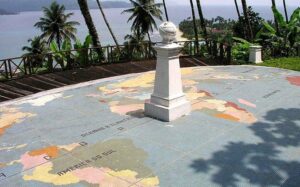
At the southern edge of São Tomé lies Ilhéu das Rolas, a small tropical islet sitting right on the Equator. A short boat ride from Porto Alegre brings you to one of the country’s most symbolic spots – where you can stand at the Equator Line Monument and quite literally be in both hemispheres at once.

Beyond the landmark, Ilhéu das Rolas offers clear waters ideal for snorkeling when the sea is calm, quiet beaches, and a wonderfully remote atmosphere. Conditions are generally best in the drier months, and the visit pairs perfectly with a southern road trip.
Discover Boca do Inferno & Praia das Sete Ondas
On the island’s northeast coast, Boca do Inferno is a dramatic natural blowhole where waves crash through volcanic rock, sending water high into the air. It’s an easy roadside stop, but the power of the ocean here is impressive – especially when the sea is rough.

Not far from it, Praia das Sete Ondas offers a long, scenic stretch of sand framed by jungle and palm trees. It’s perfect for a walk and for taking in the wild coastal scenery, though currents can be strong, so swimming isn’t always recommended. Together, they make a great addition to a north or northeast coast drive.

Climb Pico do Príncipe
For experienced hikers on Príncipe, this guided trek is demanding and can take 6 to 8 hours round trip. Expect steep sections, dense vegetation and high humidity. Weather can shift quickly. It requires advance coordination and good physical condition.

Take a Boat Trip Along the Coast
Seeing São Tomé from the water is unforgettable. From Santana or on Príncipe, small local boats run along the coast past dramatic volcanic cliffs, hidden beaches, and striking views of Pico Cão Grande rising from the jungle. Some trips include snorkeling stops or routes toward Ilhéu das Rolas near the equator.

Prices usually range between €25–€50 per person for a shared 2–3 hour trip, depending on distance and fuel costs (private boats cost more). Sea conditions matter, so always check the forecast, confirm safety equipment, and agree on duration and price before departure.

Visit Roça Sundy (Príncipe)
Known for its historical link to the 1919 eclipse experiment that confirmed Einstein’s theory, Roça Sundy is partially restored. Even if you are not staying there, you can visit the grounds and understand its scientific and colonial significance.

Hike in Ôbo Natural Park (southern trails)
Beyond Lagoa Amélia, there are deeper trails inside Ôbo. These usually require a guide and more time. Expect river crossings and muddy terrain in rainy months. They offer stronger immersion in primary forest ecosystems.

Visit local markets
Markets in São Tomé city and smaller towns show daily trade in fish, breadfruit, bananas and spices. They are not designed for tourism (which is probably what makes it more charming!) but are open and accessible. Morning visits give the most activity.

Relax at Praia Inhame
In the south of São Tomé, this beach area has basic lodging and access to boat transfers toward Ilhéu das Rolas. It works well as a base for exploring the southern coastline over 1 to 2 days.

Take a guided birdwatching walk
The islands host several endemic bird species. Guided walks increase your chances of spotting them, especially in forest areas. Early morning departures are common and weather dependent.

Drive the north coast road
A self drive along the north coast allows stops at fishing villages, viewpoints and small beaches. Road conditions are generally better than in the far south, making it a manageable half day plan.

Things to do by category

After the essentials and most popular experiences, there are still many smaller activities you can mix into your days. These are grouped by practical interest, so you can quickly see what fits your travel style and schedule.

With kids
  • Praia Lagarto: Calm waters near the city make it manageable for short beach stops.
  • Short rainforest walk in Bom Sucesso: Easy trails introduce forest without long hikes.
  • Boat ride near Santana: Short coastal trips can be adjusted to children’s tolerance.
  • Visit a cocoa farm: Simple explanations and tastings keep older kids engaged.
  • Equator monument at Ilhéu das Rolas: Clear visual concept that children understand.
  • São Tomé city promenade: Flat area for relaxed walks and breaks.

Free
  • Walk São Tomé waterfront: No ticket required, good for observing daily life.
  • Explore village churches: Open access in many towns outside service times.
  • Drive scenic south road: Forest and coastline views without entry fees.
  • Local market visit: Free to enter, pay only if you buy products.
  • North coast viewpoints: Several stops along the road offer open access.
  • Beach time at public praias: Most beaches have no entrance fee.

Seasonal
  • Turtle nesting walks: November to March with licensed guides.
  • Cocoa harvest observation: Roughly August to October in rural areas.
  • Whale watching trips: More common mid year with calmer seas.
  • Independence Day events: 12 July celebrations in the capital.
  • Santo António festivities: June events on Príncipe island.
  • Stronger waterfall visits: April and May after heavy rainfall.

Food and drink
  • Fresh grilled fish meal: Common in coastal villages.
  • Try calulu: Traditional dish often served in local restaurants.
  • Taste local chocolate: Small producers offer tastings and sales.
  • Visit a palm wine spot: Informal tasting in rural communities.
  • Market fruit sampling: Breadfruit, bananas and papaya in season.
  • Beachside lunch in the south: Simple menus with fresh catch.

Nature and landscape
  • Cascata do Bombaim: Waterfall stop combined with plantation area.
  • Southern mangrove areas: Explore by boat with local operator.
  • Cliff viewpoints near Neves: Dramatic coastal rock formations.
  • Interior river crossings: Part of guided forest hikes.
  • Volcanic rock pools: Found on parts of Príncipe’s coast.
  • Sunset at Lagoa Azul: Good visibility in dry months.

Culture and history
  • Fort São Sebastião: Small museum space in the capital.
  • Roça Água Izé: Large plantation complex in partial decay.
  • Tchiloli performance: Traditional theatre during festivities.
  • Village football matches: Informal games open to spectators.
  • Colonial architecture walk: Identify preserved facades in city center.
  • Local craft stalls: Small scale handmade goods in markets.

Active and adventure
  • Guided jungle trek: Multi hour hike in Ôbo Natural Park.
  • Kayaking in calm bays: Available depending on sea conditions.
  • Deep sea fishing trip: Organized from select coastal points.
  • Snorkeling at Lagoa Azul: When visibility allows.
  • Long south drive exploration: Combine multiple stops in one day.
  • Príncipe ridge hikes: Shorter alternatives to Pico climb.

Slow travel moments
  • Read by the ocean: Many beaches are quiet outside peak months.
  • Coffee in São Tomé city: Small cafés near the waterfront.
  • Rain listening in forest lodge: Common during wet season stays.
  • Early morning village walk: Observe daily routines.
  • Chat with plantation workers: When access is allowed.
  • Sunrise coastal walk: Especially rewarding in dry months.

Our take: São Tomé is so natural and untouched that it almost forces you to slow down. Some of the best moments aren’t planned activities – they’re simple things like watching fishermen come back with the day’s catch, stopping at a quiet beach with no one around, or enjoying fresh fruit at a local market. Use these categories to mix a few highlights with unplanned pauses, and let the island’s slower rhythm shape your days.

Map and orientation

São Tomé and Príncipe is made of two main islands: São Tomé, larger and more populated, and Príncipe, smaller and more remote. Most international flights land on São Tomé island, where the capital, São Tomé city, sits on the northeast coast. From here, roads extend north, south and inland toward the mountains.

On São Tomé island, many key stops are spread along a north south axis. The north coast includes Lagoa Azul and easier coastal drives. The interior holds Bom Sucesso and access to Ôbo Natural Park, including Lagoa Amélia. The south, reached by a single main road, concentrates Praia Jalé, Porto Alegre and viewpoints of Pico Cão Grande. Distances are not long, but road quality and rain affect timing.

Príncipe is smaller and easier to conceptualize geographically. The main settlement is Santo António in the north. From there, rougher roads lead toward beaches such as Praia Piscina and plantation sites like Roça Sundy. Hiking routes, including Pico do Príncipe, start from forested interiors and require guides.

In practice, you move linearly. On São Tomé, days are often structured as north coast, interior hike, or full south exploration. On Príncipe, you usually base yourself in one area and explore outward.

If you want help combining these areas into realistic daily plans, including driving times and overnight suggestions, read our dedicated itinerary guide.

Our take: Base yourself strategically, minimize backtracking and group activities by region rather than trying to cross the island daily.

Free Google MyMaps

To make planning easier, we’ve pinned all the places mentioned in this guide on a free Google Map. You can use it to visualize the locations, plan your route, or simply open it while exploring the island.

Through travelers’ eyes

Photos shared by travelers who explored São Tomé and Príncipe usually highlight very specific moments: the sharp silhouette of Pico Cão Grande emerging from clouds, empty stretches of sand at Praia Jalé, or the equator monument at Ilhéu das Rolas. You’ll also see simple market scenes, boat rides from Santana and quiet plantation buildings.

Travelers' tips

"My favorite place in Sao Tome and Principe though is Cao Grande Peak (Pico Cao Grande) – a huge rock in the middle of the forest that stands nearly 300 metres in height. This is something that I have never seen in any of the 71 countries I have been to. The landscape here is out of this world! Climbers have tried to make it to the top but only a few have made it."

"The highlight was standing on the exact spot where the equator crosses the Earth – a rare and thrilling experience."

"Our favorite stop in the north was Lagoa Azul, also known as the Blue Lagoon. Its striking turquoise waters made it ideal for snorkeling, swimming, or just relaxing while locals fished nearby. Even the unplanned roadside pitstops here were picturesque, adding charm to the journey."

"Because I made many photo stops on my way south and the road after seeing Pico Cão Grande becomes incredibly shit, I only arrived late in the afternoon, but I fell in love immediately. Jale Beach is very remote and there is nothing around apart from Jale Ecolodge and Domus Praia Jale. Both accommodations are located right on the beach with Jale Ecolodge a little more upscale and of course a little more expensive."

"Another beautiful spot along the coast is Boca do Inferno (the “Mouth of Hell”)—an impressive natural formation where waves crash into underwater caves and shoot dramatically into the air. While you’re there, you can also buy fresh coconuts from local vendors."

FAQs

How many days do I need in São Tomé and Príncipe?

Plan at least 5 days for São Tomé island alone to cover the south, one forest hike and a north coast drive without rushing. Add 2 to 3 extra days if including Príncipe, as transport and road conditions slow movement.

Is it necessary to hire a guide for hikes?

For major forest trails like Lagoa Amélia or deeper Ôbo routes, a guide is strongly recommended. Trails can be muddy, poorly marked and affected by weather. For short walks near roads, you can go independently.

Do I need a 4x4 to explore?

Not strictly, but it helps, especially in the south of São Tomé and on Príncipe. After heavy rain, some roads become muddy or uneven. If renting a standard car, plan routes carefully.

Can I swim at all beaches?

No. Sea conditions vary by location and season. Some beaches have strong currents or heavy swell. Always ask locally before swimming and avoid isolated areas in rough conditions.

Is Príncipe worth adding to my trip?

Yes, if you value remoteness and slower pace. It requires extra logistics and usually a domestic flight. With limited time, you may prefer focusing only on São Tomé.

Are boat trips safe?

Safety depends on operator and sea state. Confirm life jackets are available and agree on duration and route beforehand. Avoid trips in visibly rough conditions.

Is São Tomé city worth spending time in?

Yes, but briefly. A half day is enough to walk the waterfront, visit the fort and explore markets. The main highlights are outside the capital.

Can I organize everything independently?

Yes, but flexibility is key. Some hikes, turtle walks and boat transfers require local coordination. Booking accommodation in advance during dry season is advisable.

What should I prioritize if I only have 3 days?

Focus on one southern loop, one forest hike near Bom Sucesso and a relaxed north coast stop. Avoid trying to include Príncipe in such a short timeframe.

HELP US IMPROVE

How likely are you to recommend Know to Travel to a friend or fellow traveler?

Not likely at all
Extremely likely