
How to visit and what to know about Central Park

Last updated on February 6, 2026

Intro

Central Park is not something you simply visit between attractions. It is a space you move through, pause in, and often return to more than once during a New York trip. For many travelers, it becomes the place where the city slows down just enough to breathe.


The park stretches through the heart of Manhattan and connects museums, neighborhoods, and sightseeing areas that most visitors already plan to see. You might cross it on the way somewhere, stop for a short walk between activities, or spend half a day exploring without a strict plan. All of these are valid ways to experience it.


This guide is designed to help you understand how to visit Central Park in a practical way. It explains how the park is laid out, which areas matter most, how long to spend, and how to fit it naturally into your New York itinerary without feeling lost or overwhelmed.

Where is Central Park, main zones and map

Central Park sits right in the middle of Manhattan, stretching north to south between 59th Street and 110th Street. It separates the Upper West Side from the Upper East Side and acts as a natural divider between Midtown and Uptown.

What often surprises first-time visitors is its scale. Central Park is long rather than wide, which means most visits work best when planned vertically. You usually enter from one side, walk north or south through a section, and exit somewhere else instead of trying to see everything at once.

The park is generally understood in three broad layers. The south end is the most visited and closest to Midtown, with iconic landmarks and constant activity. The mid-park area feels more scenic and balanced, mixing open spaces, water, and classic viewpoints. The north end is quieter, greener, and more local, with fewer tourists and longer walking paths.

Understanding this simple north-south structure is key. Once you know which part of the park you are entering and where you plan to exit, Central Park becomes easy to navigate and fits naturally into a New York sightseeing day rather than feeling like a detour.

Best entrances and how to enter Central Park

Central Park has many entrances, but choosing the right one depends on how much time you have and what you want to see. Entering with a plan makes the park feel connected to your day instead of like a standalone stop.

Best entrances from Midtown (south end): If you are staying or sightseeing in Midtown, enter around 59th Street. These entrances are ideal for short visits, first impressions, and combining the park with nearby landmarks. They work well when you want a quick walk or a scenic shortcut rather than a long exploration.

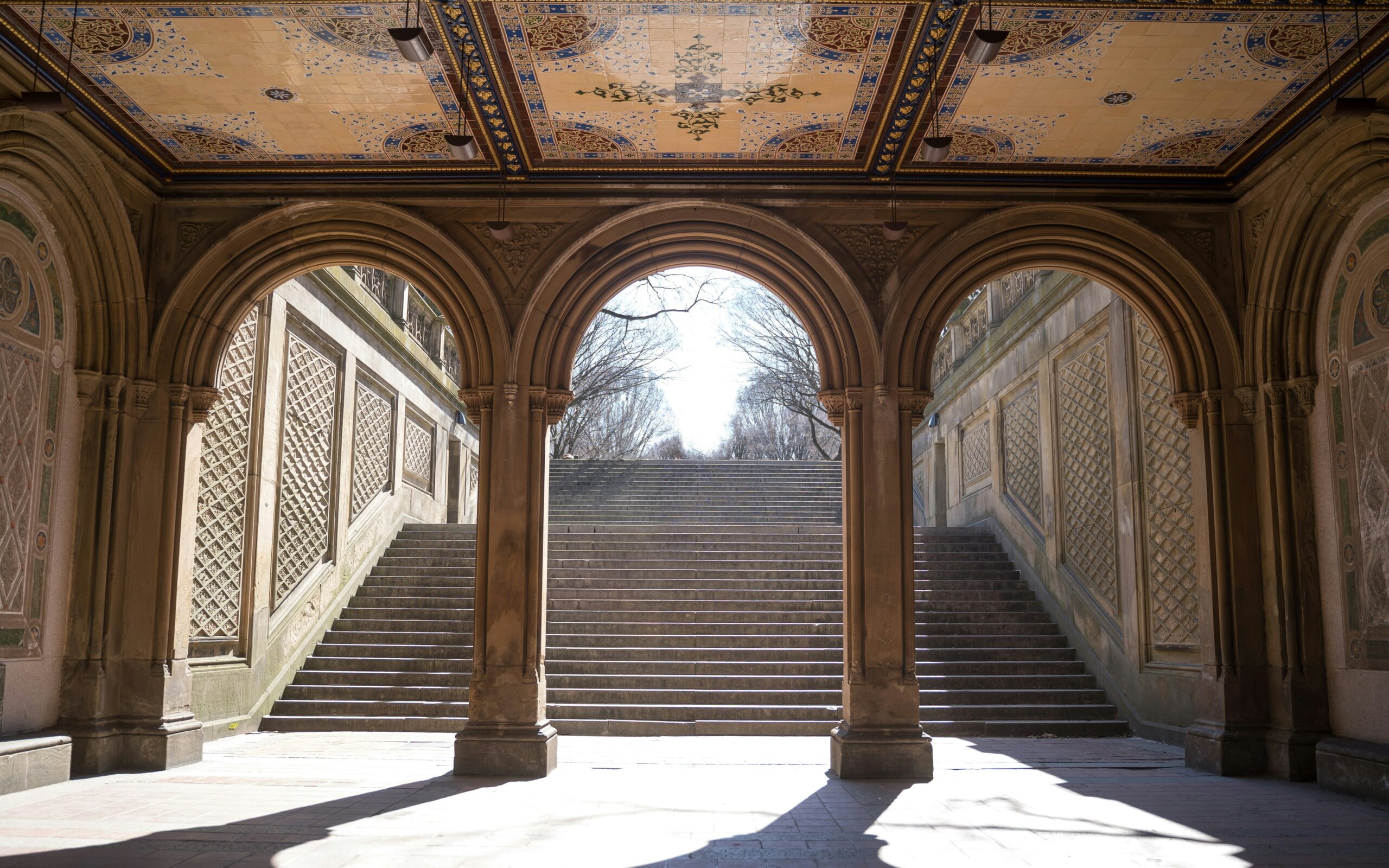
Best entrances for iconic views and landmarks: Entering near the Bethesda area, roughly around 72nd Street, puts you straight into the most scenic part of the park. This is a good choice if Central Park is a main focus for the day and you want to see classic viewpoints without walking too far first.

Best entrances near museums: If you are visiting museums along the east or west sides, entering the park directly across the street makes a lot of sense. This allows you to combine a museum visit with a walk or break in the park without changing areas.

Best entrances for quieter walks: Entering from the north side above 86th Street leads you into calmer sections with fewer visitors. This works best for longer walks, repeat visits, or travelers looking to experience a more local side of the park.

How to think about entering Central Park: Rather than planning a round trip, think in terms of entry and exit. Enter from one side, walk through a section that fits your time and energy, and exit somewhere else to continue your day. This simple approach makes Central Park feel naturally integrated into your New York itinerary instead of something you need to plan around.

How long to spend in Central Park

How much time you spend in Central Park depends on how it fits into your day, not on trying to see everything. The park adapts well to short visits and longer explorations alike.

30 to 60 minutes: Ideal if you are using the park as a connector between sights. A short walk through the south end or a stop around Bethesda Terrace is enough to reset and enjoy a change of pace.

2 to 3 hours: This is the most common and balanced visit. It allows you to explore one main zone, stop at a landmark or two, sit down for a break, and exit on the opposite side without rushing.

Half day or more: Best if Central Park is a main focus for the day. This works well when combining longer walks, quieter areas, playgrounds, or activities like biking or rowing. It is also a good option for repeat visitors.

Our take: From our experience, you’ll likely visit Central Park more than once. It’s extremely well located within the city, and it’s so vast that there’s always something new to discover (and a new movie spot to enjoy!) Because of this, there’s no need to block out a huge time slot or feel pressure to see everything in one day. Most people end up returning on different days and at different times, exploring different areas of the park little by little.


For example, if you’re visiting The Met, you can easily step into the park and see the famous Bethesda Terrace. If you’re wandering near The Plaza, you might recognize some iconic Home Alone filming spots. And if you enjoy running, a morning jog through Central Park is an experience in itself.


We actually ended up visiting Central Park several times without planning to do so in advance -and it became one of the highlights of our trip.

Central Park with kids

Central Park is one of the easiest and most rewarding places to visit in New York with kids. It offers space to move, reset, and play without strict timing, which makes it ideal for balancing busy sightseeing days.

Why it works well for families
Wide paths, frequent benches, open lawns, and multiple playgrounds make short visits easy. You can stop for 20 minutes or stay for hours without committing to a fixed plan.

Playgrounds and open space
There are many playgrounds spread throughout the park, so you rarely need to detour far to find one. The south end is convenient for quick stops, while the mid and north areas offer more space and fewer crowds.

Animals and simple attractions
The Central Park Zoo is compact and easy to fit into a family day, especially with younger kids. It works best as a short, focused visit rather than a long activity.

Walking with strollers
Street-level paths are stroller-friendly, and walking through the park is often easier than navigating sidewalks around it. Entering on one side and exiting on another keeps movement natural.

How to plan with kids
Central Park works best as a buffer, not a full-day obligation. Use it to break up museum visits, give kids time to run, or recover after a long walk. One or two relaxed stops usually lead to happier days than trying to “do” the park all at once.

Our take: For families, Central Park is less about landmarks and more about rhythm. It gives kids space to be kids and gives adults a moment of calm in the middle of the city.

FAQs

Is Central Park free to visit?

Yes. Central Park is completely free and open to the public, though some attractions inside the park have their own ticketing.

Is Central Park safe?

Yes. It is generally safe, especially during the day and on main paths. Like anywhere in a large city, stay aware of your surroundings and stick to well-lit routes after dark.

How big is Central Park really?

Much bigger than it looks on a map. Walking from the south end to the north end takes well over an hour without stops, which is why most visitors explore it in sections.

Do I need a map to visit Central Park?

It helps. Entrances and paths are signposted, but having a basic sense of where you are entering and exiting makes the visit far more enjoyable.

Can I bike in Central Park?

Yes. Cycling is allowed on designated paths, mainly along the main loop. Be aware that cyclists move fast and should stay in bike lanes.

Is Central Park worth visiting in winter?

Yes, especially if there is snow. The park feels quieter and more local, though visits are usually shorter due to cold weather.

Can I bring food and have a picnic?

Yes. Picnicking is common and allowed in many areas. Just be mindful of local rules and clean up after yourself.

Is Central Park good for short visits?

Absolutely. Even a 20 to 30 minute walk through one section can be rewarding and works well between other activities.

How many times should I visit Central Park on a trip?

Many travelers enjoy it most by visiting more than once, each time for a different purpose, such as walking, resting, or connecting parts of the city.

Is Central Park essential on a first trip to New York?

For most people, yes. It provides balance to the intensity of the city and helps you understand how New York breathes around its most important green space, Central Park.

How to visit and what to know about Central Park

Last updated on February 6, 2026

Intro

Central Park is not something you simply visit between attractions. It is a space you move through, pause in, and often return to more than once during a New York trip. For many travelers, it becomes the place where the city slows down just enough to breathe.


The park stretches through the heart of Manhattan and connects museums, neighborhoods, and sightseeing areas that most visitors already plan to see. You might cross it on the way somewhere, stop for a short walk between activities, or spend half a day exploring without a strict plan. All of these are valid ways to experience it.


This guide is designed to help you understand how to visit Central Park in a practical way. It explains how the park is laid out, which areas matter most, how long to spend, and how to fit it naturally into your New York itinerary without feeling lost or overwhelmed.

Where is Central Park, main zones and map

Central Park sits right in the middle of Manhattan, stretching north to south between 59th Street and 110th Street. It separates the Upper West Side from the Upper East Side and acts as a natural divider between Midtown and Uptown.

What often surprises first-time visitors is its scale. Central Park is long rather than wide, which means most visits work best when planned vertically. You usually enter from one side, walk north or south through a section, and exit somewhere else instead of trying to see everything at once.

The park is generally understood in three broad layers. The south end is the most visited and closest to Midtown, with iconic landmarks and constant activity. The mid-park area feels more scenic and balanced, mixing open spaces, water, and classic viewpoints. The north end is quieter, greener, and more local, with fewer tourists and longer walking paths.

Understanding this simple north-south structure is key. Once you know which part of the park you are entering and where you plan to exit, Central Park becomes easy to navigate and fits naturally into a New York sightseeing day rather than feeling like a detour.

Best entrances and how to enter Central Park

Central Park has many entrances, but choosing the right one depends on how much time you have and what you want to see. Entering with a plan makes the park feel connected to your day instead of like a standalone stop.

Best entrances from Midtown (south end): If you are staying or sightseeing in Midtown, enter around 59th Street. These entrances are ideal for short visits, first impressions, and combining the park with nearby landmarks. They work well when you want a quick walk or a scenic shortcut rather than a long exploration.

Best entrances for iconic views and landmarks: Entering near the Bethesda area, roughly around 72nd Street, puts you straight into the most scenic part of the park. This is a good choice if Central Park is a main focus for the day and you want to see classic viewpoints without walking too far first.

Best entrances near museums: If you are visiting museums along the east or west sides, entering the park directly across the street makes a lot of sense. This allows you to combine a museum visit with a walk or break in the park without changing areas.

Best entrances for quieter walks: Entering from the north side above 86th Street leads you into calmer sections with fewer visitors. This works best for longer walks, repeat visits, or travelers looking to experience a more local side of the park.

How to think about entering Central Park: Rather than planning a round trip, think in terms of entry and exit. Enter from one side, walk through a section that fits your time and energy, and exit somewhere else to continue your day. This simple approach makes Central Park feel naturally integrated into your New York itinerary instead of something you need to plan around.

Things to do in Central Park

Central Park works best when you choose activities that match your time, energy, and where you are entering. You do not need to do much for the visit to feel meaningful.

Walk through a section of the park

Walking is the default experience. Pick a zone and follow the main paths rather than trying to cover ground quickly. Even a 30-minute walk gives you a strong sense of the park.

Stop at scenic viewpoints

Areas around Bethesda Terrace, Bow Bridge, and the lake offer classic views and are easy to reach without deep exploration. These stops work well as short pauses during a busy day.

Relax on the grass or a bench

One of the simplest and best things to do is nothing. Sit, people-watch, and let the city noise fade into the background. This is especially valuable between sightseeing blocks.

Rent bikes or ride along the loop

Cycling is a good option if you want to see more of the park in limited time. Stick to the main loop and be mindful of pedestrian-heavy areas.

Row a boat on the lake

A seasonal option near Bethesda Terrace that offers a different perspective of the park. It works best as a planned stop rather than a spontaneous one.

Visit with kids

Playgrounds, open lawns, and the nearby zoo make Central Park very family-friendly. Short, flexible visits usually work better than long, structured ones.

Our take: Central Park is not about completing activities. It is about choosing one or two things that fit naturally into your day and letting the space do the rest around Central Park.

Central Park landmarks worth knowing

You do not need to see every landmark for Central Park to feel memorable. These are the places most travelers naturally pass through or intentionally seek out because they define the park’s character.

Bethesda Terrace and Fountain

The visual heart of Central Park. The terrace, stairs, and fountain sit at the center of the park’s most scenic area and connect many walking paths. It is a natural meeting point and one of the most recognizable spots.

Bow Bridge

A graceful cast-iron bridge near the lake with classic views in every direction. It is especially popular for photos and works well as a short detour during a walk.

Strawberry Fields

A quiet memorial dedicated to John Lennon near the west side of the park. The mood here is calmer and more reflective, making it a meaningful stop rather than a visual highlight.

Belvedere Castle

Set on a rocky outcrop above the park, this small castle offers elevated views and a different perspective. It is easy to include if you are exploring the mid-park area.

Jacqueline Kennedy Onassis Reservoir

A large open loop with wide views and fewer crowds. It is ideal for longer walks or jogging and gives a strong sense of the park’s scale.

Think of these landmarks as anchors rather than must-sees. Passing one or two of them during a walk is usually enough to understand why Central Park feels so distinct within New York.

How long to spend in Central Park

How much time you spend in Central Park depends on how it fits into your day, not on trying to see everything. The park adapts well to short visits and longer explorations alike.

30 to 60 minutes: Ideal if you are using the park as a connector between sights. A short walk through the south end or a stop around Bethesda Terrace is enough to reset and enjoy a change of pace.

2 to 3 hours: This is the most common and balanced visit. It allows you to explore one main zone, stop at a landmark or two, sit down for a break, and exit on the opposite side without rushing.

Half day or more: Best if Central Park is a main focus for the day. This works well when combining longer walks, quieter areas, playgrounds, or activities like biking or rowing. It is also a good option for repeat visitors.

Our take: From our experience, you’ll likely visit Central Park more than once. It’s extremely well located within the city, and it’s so vast that there’s always something new to discover (and a new movie spot to enjoy!) Because of this, there’s no need to block out a huge time slot or feel pressure to see everything in one day. Most people end up returning on different days and at different times, exploring different areas of the park little by little.


For example, if you’re visiting The Met, you can easily step into the park and see the famous Bethesda Terrace. If you’re wandering near The Plaza, you might recognize some iconic Home Alone filming spots. And if you enjoy running, a morning jog through Central Park is an experience in itself.


We actually ended up visiting Central Park several times without planning to do so in advance -and it became one of the highlights of our trip.

Central Park with kids

Central Park is one of the easiest and most rewarding places to visit in New York with kids. It offers space to move, reset, and play without strict timing, which makes it ideal for balancing busy sightseeing days.

Why it works well for families
Wide paths, frequent benches, open lawns, and multiple playgrounds make short visits easy. You can stop for 20 minutes or stay for hours without committing to a fixed plan.

Playgrounds and open space
There are many playgrounds spread throughout the park, so you rarely need to detour far to find one. The south end is convenient for quick stops, while the mid and north areas offer more space and fewer crowds.

Animals and simple attractions
The Central Park Zoo is compact and easy to fit into a family day, especially with younger kids. It works best as a short, focused visit rather than a long activity.

Walking with strollers
Street-level paths are stroller-friendly, and walking through the park is often easier than navigating sidewalks around it. Entering on one side and exiting on another keeps movement natural.

How to plan with kids
Central Park works best as a buffer, not a full-day obligation. Use it to break up museum visits, give kids time to run, or recover after a long walk. One or two relaxed stops usually lead to happier days than trying to “do” the park all at once.

Our take: For families, Central Park is less about landmarks and more about rhythm. It gives kids space to be kids and gives adults a moment of calm in the middle of the city.

Best time of day and best time of year to visit Central Park

Timing makes a noticeable difference in how Central Park feels. The same paths can feel calm and spacious or busy and social depending on when you arrive.

Best time of day
Early morning is the calmest and most local. Paths are quieter, light is soft, and the park feels expansive, especially around the Reservoir and mid-park areas. Late afternoon and early evening are livelier, with more people relaxing, performing, and gathering, which works well if you want energy and people-watching. Midday is the busiest, particularly at the south end and around Bethesda Terrace.

Best time of year
Late spring and early fall are the most comfortable. Temperatures are mild, walking is easy, and the park looks its best without extremes. Summer brings long days and a lively atmosphere, but heat and humidity can make extended walks less pleasant. Winter is quieter and visually striking after snowfall, though cold weather limits how long you may want to stay outdoors.

Seasonal highlights
Spring brings fresh greenery and blossoms, summer offers shade and activity, fall delivers color and crisp air, and winter creates a calm, stripped-back version of the park that feels more local than touristic.

If you have flexibility, aim for an early visit during shoulder seasons. If not, Central Park still adapts well. Adjust the length of your visit to the conditions, and it will fit naturally into your day.

What to combine with Central Park nearby

Central Park works best when it connects other parts of your day. Its edges touch many of New York’s most visited areas, making it easy to combine a park visit without adding travel time.

Museums along the park
The park borders two of the city’s major museum areas. On the east side, the Metropolitan Museum of Art pairs naturally with a walk through the mid-park area. On the west side, the American Museum of Natural History fits well with a stroll toward the Reservoir or nearby playgrounds. Visiting a museum first and using the park as a break, or the other way around, keeps days balanced.

Upper West Side and Upper East Side
Both neighborhoods are ideal before or after the park. They offer calmer streets, easy food options, and a more local feel. This combination works especially well for lunch stops, early dinners, or slower evenings.

Midtown and Fifth Avenue
The south end of Central Park connects directly to Midtown landmarks and shopping along Fifth Avenue. A short walk through the park is often the most pleasant way to transition between dense sightseeing blocks in this area.

Observation decks and evening plans
After a park visit earlier in the day, it is easy to continue south toward skyline viewpoints, shows, or dinner plans. Central Park acts as a natural buffer that resets energy before moving back into busier areas.

Thinking of Central Park as a connector rather than a destination on its own makes planning simpler. Enter from wherever your morning ends, walk through a section that fits your time, and exit where your next plan begins.

Practical tips

A few simple tips can make a big difference in how comfortable and enjoyable your visit to Central Park feels, especially if it is your first time.

  • Bathrooms are limited. Use restrooms at museums, the zoo, visitor centers, or nearby cafés rather than searching randomly inside the park.
  • Food options are simple inside the park. Small kiosks and vendors exist, but choices are limited. Eating before entering or planning a stop nearby is usually easier.
  • Navigation is easier than it looks. Paths are well signposted, but the park is large. Checking your entry and exit points in advance avoids unnecessary backtracking.
  • Stay on main paths after dark. The park is generally safe, but evenings are best spent on lit, busier routes rather than quiet interior trails.
  • Wear comfortable shoes. Even a short visit often involves more walking than expected, especially if you cross the park.
  • Weather changes how long you stay. In heat or cold, shorter visits work better. Adjust expectations rather than forcing a long walk.
  • Cyclists move fast. Be aware of bike lanes, especially on the main loop, and keep children close near active paths.
  • Do not try to see everything. Central Park rewards slow exploration. One area, one landmark, and some downtime is usually enough.

Approached calmly, Central Park fits naturally into a New York day and often becomes one of the most memorable parts of the trip without requiring much planning.

FAQs

Is Central Park free to visit?

Yes. Central Park is completely free and open to the public, though some attractions inside the park have their own ticketing.

Is Central Park safe?

Yes. It is generally safe, especially during the day and on main paths. Like anywhere in a large city, stay aware of your surroundings and stick to well-lit routes after dark.

How big is Central Park really?

Much bigger than it looks on a map. Walking from the south end to the north end takes well over an hour without stops, which is why most visitors explore it in sections.

Do I need a map to visit Central Park?

It helps. Entrances and paths are signposted, but having a basic sense of where you are entering and exiting makes the visit far more enjoyable.

Can I bike in Central Park?

Yes. Cycling is allowed on designated paths, mainly along the main loop. Be aware that cyclists move fast and should stay in bike lanes.

Is Central Park worth visiting in winter?

Yes, especially if there is snow. The park feels quieter and more local, though visits are usually shorter due to cold weather.

Can I bring food and have a picnic?

Yes. Picnicking is common and allowed in many areas. Just be mindful of local rules and clean up after yourself.

Is Central Park good for short visits?

Absolutely. Even a 20 to 30 minute walk through one section can be rewarding and works well between other activities.

How many times should I visit Central Park on a trip?

Many travelers enjoy it most by visiting more than once, each time for a different purpose, such as walking, resting, or connecting parts of the city.

Is Central Park essential on a first trip to New York?

For most people, yes. It provides balance to the intensity of the city and helps you understand how New York breathes around its most important green space, Central Park.

How to visit and what to know about Central Park

Last updated on February 6, 2026

Intro

Central Park is not something you simply visit between attractions. It is a space you move through, pause in, and often return to more than once during a New York trip. For many travelers, it becomes the place where the city slows down just enough to breathe.


The park stretches through the heart of Manhattan and connects museums, neighborhoods, and sightseeing areas that most visitors already plan to see. You might cross it on the way somewhere, stop for a short walk between activities, or spend half a day exploring without a strict plan. All of these are valid ways to experience it.


This guide is designed to help you understand how to visit Central Park in a practical way. It explains how the park is laid out, which areas matter most, how long to spend, and how to fit it naturally into your New York itinerary without feeling lost or overwhelmed.

Where is Central Park, main zones and map

Central Park sits right in the middle of Manhattan, stretching north to south between 59th Street and 110th Street. It separates the Upper West Side from the Upper East Side and acts as a natural divider between Midtown and Uptown.

What often surprises first-time visitors is its scale. Central Park is long rather than wide, which means most visits work best when planned vertically. You usually enter from one side, walk north or south through a section, and exit somewhere else instead of trying to see everything at once.

The park is generally understood in three broad layers. The south end is the most visited and closest to Midtown, with iconic landmarks and constant activity. The mid-park area feels more scenic and balanced, mixing open spaces, water, and classic viewpoints. The north end is quieter, greener, and more local, with fewer tourists and longer walking paths.

Understanding this simple north-south structure is key. Once you know which part of the park you are entering and where you plan to exit, Central Park becomes easy to navigate and fits naturally into a New York sightseeing day rather than feeling like a detour.

Best entrances and how to enter Central Park

Central Park has many entrances, but choosing the right one depends on how much time you have and what you want to see. Entering with a plan makes the park feel connected to your day instead of like a standalone stop.

Best entrances from Midtown (south end): If you are staying or sightseeing in Midtown, enter around 59th Street. These entrances are ideal for short visits, first impressions, and combining the park with nearby landmarks. They work well when you want a quick walk or a scenic shortcut rather than a long exploration.

Best entrances for iconic views and landmarks: Entering near the Bethesda area, roughly around 72nd Street, puts you straight into the most scenic part of the park. This is a good choice if Central Park is a main focus for the day and you want to see classic viewpoints without walking too far first.

Best entrances near museums: If you are visiting museums along the east or west sides, entering the park directly across the street makes a lot of sense. This allows you to combine a museum visit with a walk or break in the park without changing areas.

Best entrances for quieter walks: Entering from the north side above 86th Street leads you into calmer sections with fewer visitors. This works best for longer walks, repeat visits, or travelers looking to experience a more local side of the park.

How to think about entering Central Park: Rather than planning a round trip, think in terms of entry and exit. Enter from one side, walk through a section that fits your time and energy, and exit somewhere else to continue your day. This simple approach makes Central Park feel naturally integrated into your New York itinerary instead of something you need to plan around.

Things to do in Central Park

Central Park works best when you choose activities that match your time, energy, and where you are entering. You do not need to do much for the visit to feel meaningful.

Walk through a section of the park

Walking is the default experience. Pick a zone and follow the main paths rather than trying to cover ground quickly. Even a 30-minute walk gives you a strong sense of the park.

Stop at scenic viewpoints

Areas around Bethesda Terrace, Bow Bridge, and the lake offer classic views and are easy to reach without deep exploration. These stops work well as short pauses during a busy day.

Relax on the grass or a bench

One of the simplest and best things to do is nothing. Sit, people-watch, and let the city noise fade into the background. This is especially valuable between sightseeing blocks.

Rent bikes or ride along the loop

Cycling is a good option if you want to see more of the park in limited time. Stick to the main loop and be mindful of pedestrian-heavy areas.

Row a boat on the lake

A seasonal option near Bethesda Terrace that offers a different perspective of the park. It works best as a planned stop rather than a spontaneous one.

Visit with kids

Playgrounds, open lawns, and the nearby zoo make Central Park very family-friendly. Short, flexible visits usually work better than long, structured ones.

Our take: Central Park is not about completing activities. It is about choosing one or two things that fit naturally into your day and letting the space do the rest around Central Park.

Central Park landmarks worth knowing

You do not need to see every landmark for Central Park to feel memorable. These are the places most travelers naturally pass through or intentionally seek out because they define the park’s character.

Bethesda Terrace and Fountain

The visual heart of Central Park. The terrace, stairs, and fountain sit at the center of the park’s most scenic area and connect many walking paths. It is a natural meeting point and one of the most recognizable spots.

Bow Bridge

A graceful cast-iron bridge near the lake with classic views in every direction. It is especially popular for photos and works well as a short detour during a walk.

Strawberry Fields

A quiet memorial dedicated to John Lennon near the west side of the park. The mood here is calmer and more reflective, making it a meaningful stop rather than a visual highlight.

Belvedere Castle

Set on a rocky outcrop above the park, this small castle offers elevated views and a different perspective. It is easy to include if you are exploring the mid-park area.

Jacqueline Kennedy Onassis Reservoir

A large open loop with wide views and fewer crowds. It is ideal for longer walks or jogging and gives a strong sense of the park’s scale.

Think of these landmarks as anchors rather than must-sees. Passing one or two of them during a walk is usually enough to understand why Central Park feels so distinct within New York.

How long to spend in Central Park

How much time you spend in Central Park depends on how it fits into your day, not on trying to see everything. The park adapts well to short visits and longer explorations alike.

30 to 60 minutes: Ideal if you are using the park as a connector between sights. A short walk through the south end or a stop around Bethesda Terrace is enough to reset and enjoy a change of pace.

2 to 3 hours: This is the most common and balanced visit. It allows you to explore one main zone, stop at a landmark or two, sit down for a break, and exit on the opposite side without rushing.

Half day or more: Best if Central Park is a main focus for the day. This works well when combining longer walks, quieter areas, playgrounds, or activities like biking or rowing. It is also a good option for repeat visitors.

Our take: From our experience, you’ll likely visit Central Park more than once. It’s extremely well located within the city, and it’s so vast that there’s always something new to discover (and a new movie spot to enjoy!) Because of this, there’s no need to block out a huge time slot or feel pressure to see everything in one day. Most people end up returning on different days and at different times, exploring different areas of the park little by little.


For example, if you’re visiting The Met, you can easily step into the park and see the famous Bethesda Terrace. If you’re wandering near The Plaza, you might recognize some iconic Home Alone filming spots. And if you enjoy running, a morning jog through Central Park is an experience in itself.


We actually ended up visiting Central Park several times without planning to do so in advance -and it became one of the highlights of our trip.

Central Park with kids

Central Park is one of the easiest and most rewarding places to visit in New York with kids. It offers space to move, reset, and play without strict timing, which makes it ideal for balancing busy sightseeing days.

Why it works well for families
Wide paths, frequent benches, open lawns, and multiple playgrounds make short visits easy. You can stop for 20 minutes or stay for hours without committing to a fixed plan.

Playgrounds and open space
There are many playgrounds spread throughout the park, so you rarely need to detour far to find one. The south end is convenient for quick stops, while the mid and north areas offer more space and fewer crowds.

Animals and simple attractions
The Central Park Zoo is compact and easy to fit into a family day, especially with younger kids. It works best as a short, focused visit rather than a long activity.

Walking with strollers
Street-level paths are stroller-friendly, and walking through the park is often easier than navigating sidewalks around it. Entering on one side and exiting on another keeps movement natural.

How to plan with kids
Central Park works best as a buffer, not a full-day obligation. Use it to break up museum visits, give kids time to run, or recover after a long walk. One or two relaxed stops usually lead to happier days than trying to “do” the park all at once.

Our take: For families, Central Park is less about landmarks and more about rhythm. It gives kids space to be kids and gives adults a moment of calm in the middle of the city.

Best time of day and best time of year to visit Central Park

Timing makes a noticeable difference in how Central Park feels. The same paths can feel calm and spacious or busy and social depending on when you arrive.

Best time of day
Early morning is the calmest and most local. Paths are quieter, light is soft, and the park feels expansive, especially around the Reservoir and mid-park areas. Late afternoon and early evening are livelier, with more people relaxing, performing, and gathering, which works well if you want energy and people-watching. Midday is the busiest, particularly at the south end and around Bethesda Terrace.

Best time of year
Late spring and early fall are the most comfortable. Temperatures are mild, walking is easy, and the park looks its best without extremes. Summer brings long days and a lively atmosphere, but heat and humidity can make extended walks less pleasant. Winter is quieter and visually striking after snowfall, though cold weather limits how long you may want to stay outdoors.

Seasonal highlights
Spring brings fresh greenery and blossoms, summer offers shade and activity, fall delivers color and crisp air, and winter creates a calm, stripped-back version of the park that feels more local than touristic.

If you have flexibility, aim for an early visit during shoulder seasons. If not, Central Park still adapts well. Adjust the length of your visit to the conditions, and it will fit naturally into your day.

What to combine with Central Park nearby

Central Park works best when it connects other parts of your day. Its edges touch many of New York’s most visited areas, making it easy to combine a park visit without adding travel time.

Museums along the park
The park borders two of the city’s major museum areas. On the east side, the Metropolitan Museum of Art pairs naturally with a walk through the mid-park area. On the west side, the American Museum of Natural History fits well with a stroll toward the Reservoir or nearby playgrounds. Visiting a museum first and using the park as a break, or the other way around, keeps days balanced.

Upper West Side and Upper East Side
Both neighborhoods are ideal before or after the park. They offer calmer streets, easy food options, and a more local feel. This combination works especially well for lunch stops, early dinners, or slower evenings.

Midtown and Fifth Avenue
The south end of Central Park connects directly to Midtown landmarks and shopping along Fifth Avenue. A short walk through the park is often the most pleasant way to transition between dense sightseeing blocks in this area.

Observation decks and evening plans
After a park visit earlier in the day, it is easy to continue south toward skyline viewpoints, shows, or dinner plans. Central Park acts as a natural buffer that resets energy before moving back into busier areas.

Thinking of Central Park as a connector rather than a destination on its own makes planning simpler. Enter from wherever your morning ends, walk through a section that fits your time, and exit where your next plan begins.

Practical tips

A few simple tips can make a big difference in how comfortable and enjoyable your visit to Central Park feels, especially if it is your first time.

  • Bathrooms are limited. Use restrooms at museums, the zoo, visitor centers, or nearby cafés rather than searching randomly inside the park.
  • Food options are simple inside the park. Small kiosks and vendors exist, but choices are limited. Eating before entering or planning a stop nearby is usually easier.
  • Navigation is easier than it looks. Paths are well signposted, but the park is large. Checking your entry and exit points in advance avoids unnecessary backtracking.
  • Stay on main paths after dark. The park is generally safe, but evenings are best spent on lit, busier routes rather than quiet interior trails.
  • Wear comfortable shoes. Even a short visit often involves more walking than expected, especially if you cross the park.
  • Weather changes how long you stay. In heat or cold, shorter visits work better. Adjust expectations rather than forcing a long walk.
  • Cyclists move fast. Be aware of bike lanes, especially on the main loop, and keep children close near active paths.
  • Do not try to see everything. Central Park rewards slow exploration. One area, one landmark, and some downtime is usually enough.

Approached calmly, Central Park fits naturally into a New York day and often becomes one of the most memorable parts of the trip without requiring much planning.

FAQs

Is Central Park free to visit?

Yes. Central Park is completely free and open to the public, though some attractions inside the park have their own ticketing.

Is Central Park safe?

Yes. It is generally safe, especially during the day and on main paths. Like anywhere in a large city, stay aware of your surroundings and stick to well-lit routes after dark.

How big is Central Park really?

Much bigger than it looks on a map. Walking from the south end to the north end takes well over an hour without stops, which is why most visitors explore it in sections.

Do I need a map to visit Central Park?

It helps. Entrances and paths are signposted, but having a basic sense of where you are entering and exiting makes the visit far more enjoyable.

Can I bike in Central Park?

Yes. Cycling is allowed on designated paths, mainly along the main loop. Be aware that cyclists move fast and should stay in bike lanes.

Is Central Park worth visiting in winter?

Yes, especially if there is snow. The park feels quieter and more local, though visits are usually shorter due to cold weather.

Can I bring food and have a picnic?

Yes. Picnicking is common and allowed in many areas. Just be mindful of local rules and clean up after yourself.

Is Central Park good for short visits?

Absolutely. Even a 20 to 30 minute walk through one section can be rewarding and works well between other activities.

How many times should I visit Central Park on a trip?

Many travelers enjoy it most by visiting more than once, each time for a different purpose, such as walking, resting, or connecting parts of the city.

Is Central Park essential on a first trip to New York?

For most people, yes. It provides balance to the intensity of the city and helps you understand how New York breathes around its most important green space, Central Park.

HELP US IMPROVE

How likely are you to recommend Know to Travel to a friend or fellow traveler?

Not likely at all
Extremely likely